


Many mechanical equipment manufacturers keep facing frequent quality faults, short service life of components, and unstable assembly matching accuracy, yet they rarely trace the root causes to raw material properties and die casting process standards. Most buyers only focus on surface size parameters and unit prices, ignoring internal porosity, stress deformation, corrosion resistance difference, and fatigue resistance defects that only appear after long-term operation. These invisible problems directly cause equipment downtime, maintenance costs soaring, and delayed delivery cycles. Choosing qualified aluminum alloy die casting components becomes the core solution to avoid systematic production risks in automotive accessories, intelligent machinery, communication hardware, and industrial supporting structures.
Irregular die casting production processes easily produce micro-pore defects inside aluminum parts. Such defects cannot be detected by simple appearance inspection, but will gradually expand under high temperature, vibration and frequent load changes. Oil leakage, air leakage, fracture damage and air pressure instability all originate from these hidden internal structural flaws. Ordinary low-cost castings cannot withstand continuous complex working conditions, leading to repeated replacement of vulnerable parts and continuous extra expenditure for enterprises. Professional customized die casting production from Longyang Precision Foundry strictly controls melting temperature, mold cooling speed and pressure holding parameters, effectively eliminating internal micropores and dense loose structures that plague mass production stability.
Different aluminum alloy material grades show huge differences in mechanical strength, thermal conductivity, oxidation resistance and dimensional stability. Randomly replacing materials without professional matching analysis will lead to parts cracking under low temperature, deformation under high temperature, poor welding performance and unqualified surface anodizing effect. A large number of engineering cases prove that blind pursuit of low unit price often brings 3 to 5 times higher later maintenance loss. Reasonable material selection combined with precision die casting technology can comprehensively upgrade overall component performance and adapt to harsh outdoor, high-pressure and frequent operation environments.
Assembly matching accuracy directly determines the overall operation efficiency of complete mechanical equipment. Die casting deviations, uneven wall thickness, and residual molding stress will cause tight fitting, loose clearance, abnormal wear and abnormal noise during equipment operation. Traditional rough-process castings cannot meet the tolerance requirements of modern automated precision assembly lines, restricting equipment upgrading and high-precision matching of finished products. Standardized numerical control post-processing, surface deburring and dimensional calibration processes ensure each finished part maintains consistent interchangeability and installation accuracy in batch production.
Surface treatment quality directly affects the service cycle and environmental adaptability of aluminum die castings. Unqualified passivation, spraying and anodizing processes lead to rapid oxidation, rust, peeling and corrosion on the surface of parts in humid, dusty and corrosive industrial environments. Many enterprises misunderstand that smooth appearance equals good durability, ignoring film thickness uniformity, adhesion firmness and salt spray resistance indicators. Standard multi-process surface finishing improves wear resistance, insulation performance and weather resistance, greatly reducing failure rate caused by environmental erosion during long-term use.
Performance Comparison Table Of Ordinary Die Castings & High-Precision Aluminum Alloy Die Casting Parts
| Performance Index | Ordinary Low-Quality Die Cast Parts | Premium Precision Aluminum Alloy Die Cast Parts |
|---|---|---|
| Internal Structural Density | High porosity, easy air & oil leakage | Compact structure, zero obvious internal defects |
| Dimensional Tolerance Range | Large deviation, poor batch consistency | Ultra-small tolerance, stable interchangeability |
| High & Low Temperature Resistance | Easy deformation, cracking under extreme temperature | Stable size, adaptive to wide temperature working conditions |
| Fatigue Service Life | Short, frequent damage under continuous vibration | Long durable, anti-fatigue and anti-impact |
| Salt Spray Resistance | Poor, easy corrosion in humid harsh environment | Strong anti-corrosion, stable for outdoor long-term use |
| Surface Treatment Adhesion | Easy peeling, fading and falling off | Firm film layer, wear-resistant and anti-oxidation |
Most downstream purchasers overlook the matching compatibility between die casting parts and complete equipment structure. Improper wall thickness design, unreasonable corner transition and unreasonable stress distribution will cause concentrated stress damage during operation. Even if single-piece quality passes inspection, overall equipment operation stability cannot be guaranteed. Professional customized die casting schemes integrate structural optimization, material matching and process design in advance, avoiding subsequent modification, reprocessing and assembly adjustment losses.
Batch production stability is another key hidden problem ignored by most buyers. Irregular factories have huge quality differences between different production batches, resulting in inconsistent installation dimensions and unmatched accessory specifications. This seriously disrupts orderly mass assembly production and improves overall production scrap rate. Mature die casting production lines implement full-process quality testing from raw material melting, mold forming to finished product inspection, ensuring every batch of products maintains unified quality standards.
Long-term comprehensive cost advantage is far more important than single piece purchase price. Cheap inferior aluminum castings save upfront costs, but bring frequent shutdown maintenance, spare parts replacement, customer complaint losses and construction period delays. High-standard precision die casting parts reduce comprehensive operation and maintenance costs throughout the service cycle, improve enterprise production efficiency and brand product quality competitiveness. Scientific procurement focusing on full-life cycle value is the wise choice for long-term stable operation of mechanical manufacturing enterprises.
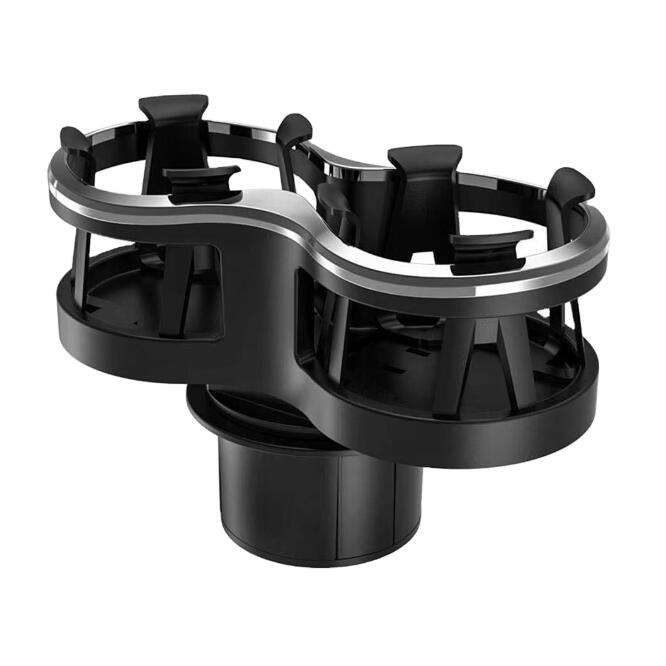
By mastering core die casting technology, strict material screening, precise dimensional control and standardized surface treatment, qualified aluminum alloy die casting components can thoroughly solve various hidden quality hazards that plague mechanical processing and assembly industries. Choosing professional customized precision cast parts helps enterprises avoid unnecessary production risks, stabilize product quality and continuously enhance market competitiveness in long-term industrial cooperation.